
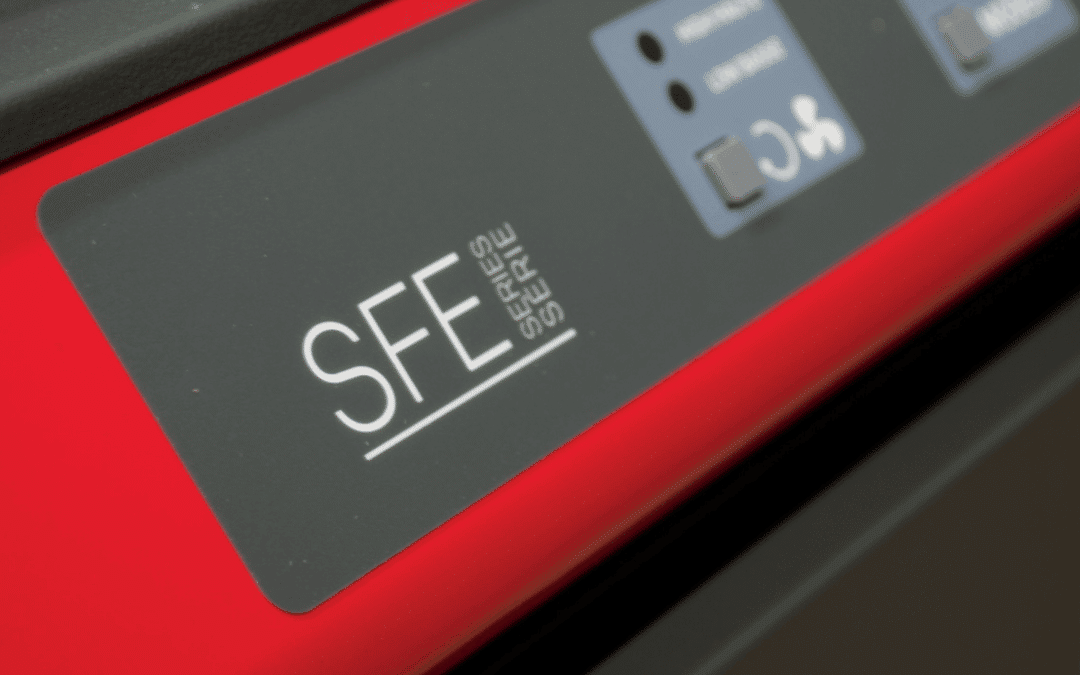
Quebec is not a market “like any other” for residential heating. Here, electricity is not just a commodity: it is a cultural, economic and energy infrastructure. In 2021, Statistics Canada recalled that, thanks to hydroelectricity, nearly two-thirds of Quebec households said they heat their homes with electric baseboard heaters (58%) or electric radiant heating (7%), making the province one of the places where electric heating is most widespread in the country. (Statistics Canada)
At the same time, the pressure on power in winter is increasing: Hydro-Québec insists on the growth in electricity demand (and on the interest of power management measures in cold periods), especially in a context where demand could double by 2050. (Hydro-Québec) And the Institut du Québec, in a simulation exercise, indicates that the electrification of buildings can increase power demand at the winter peak by +7% in 2030 and +32% in 2050 (depending on the scenarios presented). (Institut du Québec)
In this context, the question “which electric furnace to choose?” goes beyond a simple price comparison. An electric forced-air furnace is not just a “big toaster”: it is a distribution, a fan, a control, sometimes a modulation, and more and more often an element of a combination of heat pump + electric backup (the most energy-intelligent scenario… when it is well sized).
This article offers a structured editorial ranking, fully usable for a Quebec audience, with a “field” reading for Montreal: service network, quality of technical documentation, heat pump compatibility, comfort (noise and stability), power logic (kW) adapted to the local real estate stock. Useful link (further reading on the installation side): the page on the electric furnace can be used as a reference point to frame the needs and prepare a quote.
What we rank (and what we don’t promise)
Before moving on to the list, a methodological clarification: there is no “universal” equivalent in Quebec of a large public satisfaction survey such as the one conducted by Protégez-Vous for heat pumps (reliability rate reported by owners, severity of breakdowns, etc.) — at least not in the open technical sources that you sent us for electric furnaces. Here the classification is therefore a technical and practical combination based on:
- Manufacturer data sheets and technical documents (ECM motor, modulation, kW ranges, configurations),
- available public guarantees (where documented),
- “Quebec market” consistency: availability, integration with forced-air systems, heat pump compatibility and easy maintenance.
In other words: we prioritize the intelligence of the design, the promise of a stable experience (comfort + simplicity + service), the energy relevance in a Quebec where heating weighs very heavily in domestic consumption (Hydro-Québec shows, for example, the share of heating/air conditioning in a household’s consumption). (Hydro-Québec)
Ranking methodology
How to go from a technical sheet to a rank (and why it’s different from a simple “top 5”)
1) The basics: electrical performance and air control
An electric furnace transforms electricity into heat with a “resistive” efficiency that, theoretically, is close to 100%. It is therefore not a miracle return, but:
- the quality of the air distribution (stability, stratification, perceived comfort),
- the possibility of escaping violent cycles (on/off) by modulation or fine management of the stages,
- the consumption and noise of the motor (hence the interest of variable speed ECM motors).
2) The heart of comfort: ECM, variable speed, modulation
In your database, three words come up – and this is not a coincidence:
- ECM (Electronically Commutated Motor): an electronically commutated motor, generally more efficient and above all more flexible (variable speed) to maintain a constant airflow, reduce noise and improve the comfort experienced. Manufacturers often put forward this argument (e.g. Stelpro SFEX/SFECM).
- Modulation : Heating power can be adjusted more precisely than 1–2 levels. On an electric furnace, modulation is mainly used to soften the interior temperature and to avoid “peaks” in hot/cold blowing. Dettson clearly mentions that modulation (0 to 100%) is associated with the use of a variable speed motor to really benefit from it.
- Heat pump compatibility : a good “electric furnace” in Quebec is a smart backup. Some generators and modules (e.g. Daikin MBVC) are designed for communicating systems and to maintain a constant flow even if the pipes are poorly made (very common in existing systems).
3) Our weighting (what makes a mark go up or down)
We have noted (transformed into stars) on 6 axes:
- Comfort and stability (ECM + stage management/modulation + control logic)
- “Practical” robustness (simplicity, tolerance to duct realities, air return, static)
- Heat pump compatibility (integration, communication, constant flow)
- Technical documentation (fact sheets, guides, parameter clarity)
- Warranty and conditions (when public documentation is clear)
- Relevance of Montreal/Greater Montreal (service, availability, logic of installation in the existing area)
That’s why our ranking may be different from another “top” you will find elsewhere: some only take into account popularity, others price, others warranty. Here, we aim for the best compromise for real use in Quebec.
Comparison Table
Stars, strengths, limitations and usage profile
| Rank | Brand (flagship model or family) | Note (⭐) | What makes her shine in Quebec | What to look out for before you buy |
|---|---|---|---|---|
| 1 | Stelpro (SFE/SFEX/SFECM) | ⭐⭐⭐⭐⭐ | “Comfort + control” orientation, ECM motor, installation logic facilitated by integrated probe; speech very focused on stability and low noise (Stelpro) | Duct sizing and quality: even an excellent furnace does not compensate for an unbalanced network |
| 2 | Dettson (Modulating Supreme) | ⭐⭐⭐⭐⭐ | Modulation advertised 0–100% + variable speed motor for real comfort gains (Dettson) | Check the exact architecture (Supreme platform) and integration if you are looking for a hybrid system with a heat pump |
| 3 | Daikin (MBVC / modular blower) | ⭐⭐⭐⭐ | Very strong on the constancy of the air flow (constant CFM), ecosystem/thermostat compatibility, “blower section usable as electric furnace” (Daikin Comfort) | More “system” approach: installation and configuration must be impeccable to take advantage of the advanced features |
| 4 | Nortron / Ouellet (OFE-ECM) | ⭐⭐⭐⭐ | Documented ECM series, multi-position, modulation of elements via cards, 5-year warranty against defects (according to docs) (Ouellet) | Power range and options: validate home suitability (kW) and access to local service |
| 5 | Arcoary (fan coil / FCM4X + elements) | ⭐⭐⭐ ☆☆ | Detailed technical documentation on fan coil + kW range platforms, sometimes advantageous warranty logic depending on registration (United Refrigeration) | Highly dependent on the couple installer + configuration; check warranty conditions (registration, parts) |
The stars are an editorial synthesis based on accessible documents and “field” relevance in Quebec, not a promise of breakage rates.
Why this ranking differs from some “tops” (and why it’s intentional)
Your base note said: “Stelpro, Dettson, Daikin, Arcoaire and Nortron dominate the recommendations in Quebec thanks to ECM, modulation and heat pump compatibility.” We agree with the spirit of the … but not with the idea that a simple inventory of brands is enough.
Our ranking changes the order because:
- we reward the quality of the control + comfort (credible modulation + ECM + installation logic) more than just notoriety,
- we value technical readability : when a brand publishes structured sheets on the constancy of the CFM, thermostat compatibility, dehumidification modes, etc., it reduces the risk of a “misunderstood” installation (typical case in renovation),
- we integrate the “electricity grid and winter peak” angle: in a Quebec where Hydro-Québec insists on the growth of demand (Hydro-Québec) and where analyses indicate that the electrification of buildings can increase the peak (Institut du Québec), a furnace must be thought of as an element of a system (ducts, thermostat, possibly heat pump) — not as an isolated purchase.
A useful link in terms of the energy context: the energy portrait of Quebec reminds us of the dominant place of electricity and provincial production (hydro) — useful for contextualizing the “all-electric”. (CER)
Detailed Brand Analysis
What each brand means to a homeowner in Montreal
1) Stelpro (SFE, SFEX, SFECM)
Why it’s our #1 for an “electric furnace” designed as a Quebec product, not as a compromise
Stelpro has a very “user experience” approach — which is rare on an electric heating product, often sold as a commodity. In its documentation, the brand states:
- electronic controls and a temperature stability logic (with integrated probe highlighted as an installation asset),
- the appeal of an ECM motor that makes continuous ventilation more affordable and contributes to quieter operation,
- a clear message on the reduction of temperature differences and a low noise level on some versions. (Stelpro)
This positioning is very much in Montreal: many homes (plexes, renovated single-family homes, cottages) have poorly made ducts, suboptimal air returns, space constraints (basement, technical closet, etc.). A boiler that is more “forgiving” of the installation — or that facilitates it — decreases the risk of dissatisfaction.
What makes Stelpro score points in our approach is not a promise of a miracle on resistive heat: it’s the control of comfort. In other words: if you opt for an electric furnace, you might as well opt for the one that spares you the two most common complaints of forced air: noise/variations and the impression of poorly distributed air.
What you need to check before signing: the power (kW) actually needed. A house oversized in kW without necessity means more cycles, more electrical stress, and sometimes less comfort.
2) Dettson (Modulating Supreme)
The “serious modulation” mode when you want to smooth the temperature rather than heat up in fits and starts
Dettson, with the modulating Supreme, puts forward an argument that hits the nail on the head in Quebec: the modulation announced from 0 to 100%, and especially associated with the use of a variable speed motor to make the modulation “real” in its advantages. (Dettson)
Why is this distinction crucial? Because in forced air, the human feeling is not just the temperature measured. It’s:
- the blowing speed,
- the constancy of the heat,
- the ability to avoid “rapid overheating” followed by a fall,
- noise when starting and stopping.
A well-made modulation allows you to heat up longer at low power and therefore to have a more “hydronic” feeling (radiators) while remaining in forced air.
The Dettson advantage for the Quebec market also lies in a practical reality: a local brand is easier to have repaired and diagnosed quickly (parts, regular technicians, etc.). This criterion does not always come up in “purely technical” comparisons, but it changes your life when you are in January and you don’t want to wait.
What to look out for: The Supreme is a “family/platform”. When quoting, you demand in black and white: power, control configuration, engine type, integration logic with air conditioning or heat pump if that’s your intention.
3) Daikin (MBVC – modular blower, variable speed)
The king of “well-tuned” systems: constant CFM, communication, precise control… if the installation follows
Daikin is high because its MBVC logic reads like a “systems engineering” module, not a device. The technical sheet highlights:
- a variable speed ECM motor,
- the ability to deliver a constant CFM over a wide range of static pressure, regardless of the duct system,
- compatibility with thermostat and communicating equipment (e.g. Daikin One+),
- Advanced airflow and tonnage configuration in communication mode. (Daikin Comfort)
Basically: in homes where the ducts are not “perfect”, the idea of having a constant airflow is a plus. In the product page, Daikin also emphasizes practical features such as the reminder of recent defects, integrated dehumidification and the fact that the fan part can be used as an electric furnace. (Daikin)
So why is Daikin not #1? Because a very “smart” system punishes installations more or less. If the configuration is poorly carried out, a smart product can become annoying (poor thermostat/equipment communication, poorly calibrated flow, etc.). In our approach, Daikin gains a lot on engineering, but loses a little on “tolerance” to the imperfect site – and this is often the case in renovation in Montreal.
Typical profile: owner who wants a complete system (air handler + control + heat pump if necessary), and who selects an installer who knows how to document and adjust the system.
4) Nortron / Ouellet (OFE-ECM)
The “rational and enlightened” choice for everyday residential use, with ECM, multi-position and clear plugs
The OFE-ECM series has a simple but strong asset: documentation. A sheet (catalogue) presents the multi-position, the possible air return on several sides, the “zero clearance” installation against combustible surfaces, and a 5-year warranty against defects (in published documents). (Ouellet)
The product page also reminds us:
- variable speed motor (ECM) for cost savings,
- modulation of the elements by electronic cards,
- Insulated housing for low loss and noise. (Ouellet)
And when you get to the “detail sheet” level, you have information about kW, BTU/h, amperage, CFM — useful for validating the sizing. (Alma Appliance)
Nortron moves up in our ranking because it is “serious, clear, installable”. It is behind Stelpro/Dettson/Daikin mainly because its offer is a little less focused on “premium modulation + high comfort experience” (according to what you have shared and the public documentation). But for many Montreal projects (bungalows, cottages, small plexes), it is precisely this technical simplicity that is reassuring.
5) Arcoary (fan coil / FCM + elements)
A platform logic: very good if you build a complete system, more random if you want a “plug-and-play” solution
Arcoaire is often presented by fan coil tables and data sheets on air delivery (CFM) per kW of electrical elements. A data sheet (FCM4X) presents tables of air flow rates and kW ranges, and warranties. (United Refrigeration) The fan coils page also mentions warranty conditions in case of registration (10 years parts if registered on time, 5 years otherwise). (Arcoaire)
Why is this brand ranked lower? Because we are more in a configuration logic (platform + options) where the variability of the experience is very dependent:
- the installer,
- selected fragments,
- warranty conditions (registration, parts),
- Integration with other elements
Arcoaire can be very good in a well-defined project, but it has been put behind more directly “readable” offers focused on the Quebec electric market.
How to buy a heat pump in Montreal
The “field” section that avoids costly mistakes
The electric furnace is often chosen for its simplicity, but simplicity is deceptive: 80% of perceived comfort problems in forced air come from the system (ducts, air returns, balance), not from the electrical resistance itself.
Here is the only section where I use bullet points, on purpose, to make an actionable checklist:
- Validate the power (kW) with a load calculation (insulation, windows, infiltration, volume, habits) rather than by “feeling”.
- Examine the duct system: leaks, crushed sections, insufficient air returns, poorly distributed vents.
- Require motor details (ECM, variable speed or not) and control logic (stages, modulation).
- If a heat pump is planned: ask for the backup scenario (what temperature is switched to, which thermostat, which mode).
- Check the space at the electrical panel (amperage, circuit breakers, margin).
- Document warranty: parts, labor, registration requirements, parts lead times.
This framework is also in line with the reality of the grid: when Hydro-Québec talks about demand management and winter peaks, it reminds us that “poorly thought-out” electric heating can be expensive in terms of consumption and power demand.
FAQ
How many Quebec homes heat with electricity, exactly?
According to an article by Statistics Canada (2021 data), 58% of Quebec households said they heat with electric baseboard heaters and 7% with electric radiant heating. 65% of households use these types of electric heating as their main heating system, making Quebec fertile ground for electric and hybrid solutions. (Statistics Canada)
Is an electric furnace “efficient”?
In theory, a resistive electric furnace converts almost all electricity into heat. It is therefore not a question of a “miracle” performance, but of comfort, stability, intelligent management of the system (air flow, cycles, thermostat, heat pump integration). That’s also why Hydro-Québec explains the share of heating/cooling in a household’s consumption: it’s an important item, so optimizing the system counts. (Hydro-Québec)
Why is there so much buzz about ECM motors?
Because the fan motor has a direct impact on 3 things: auxiliary consumption (ventilation), noise and stability of the air flow. Quebec and North American manufacturers promote ECM for these reasons, for example Stelpro, which links its SFEX/SFECM models to energy savings and a very low noise level. (Stelpro)
Is modulation useful on an electric furnace?
Yes, but not as a promise of “magical savings”: it is above all a comfort. Dettson explains that the modulating Supreme works with an announced modulation from 0 to 100%, relevant with a variable speed motor to reap the advantages (smoother cycles, better stability). (Dettson)
Why is your #1 Stelpro and not Dettson, when Dettson has a very advanced modulation?
Because we categorize the overall balance “Quebec market”: Stelpro mixes comfort orientation, installation logic (integrated probe), and clear emphasis on the ECM motor and electronic controls to minimize temperature differences. (Stelpro) Dettson is very good and comes right after: in some projects, especially when modulation is used to its maximum, Dettson may be the best choice. Our ranking depends on the average Montreal profile: renovation, poorly done ducts, need for a lenient solution.
Daikin MBVC: an “electric furnace”?
Daikin describes MBVC as a variable speed blower / air handler module, communicating, constant CFM over a wide range of static pressures, and the product page mentions that the fan section can be used as an electric furnace. (Daikin Comfort)
Concretely: very interesting system if you make a set (often with a heat pump), and if the installation/configuration is mastered.
Nortron OFE-ECM: Warranty and Written Specifications
In the documentation (catalogue/sheet) we find 5-year warranty against defects, multi-position, installation details (air return possible, zero clearance installation). (Ouellet)
The product page also talks about an ECM motor, modulation of the elements by electronic boards, and an insulated subwoofer to limit losses and noise. (Ouellet)
Arcoaire: why more “random”?
Arcoaire often presents itself through platforms (fan coils, CFM vs kW tables, etc.). Technical data sheets present the logic of air flows according to the kW of elements, and the warranty pages present registration conditions (10 years of parts if registration within a period, otherwise 5 years). (United Refrigeration)
It is therefore a good choice when the project is well monitored, but more dependent on the configuration + installer couple.
Is it true that electricity demand in winter is becoming a major issue?
Yes, and that’s why we’re pushing the sizing and the heat pump + succession strategy. Hydro-Québec highlights the increase in demand (up to a doubling by 2050 according to its communications on power management). (Hydro-Québec)
And the Institut du Québec indicates, in a simulation exercise, that the electrification of buildings can increase demand at the winter peak by +7% (2030) and +32% (2050) depending on the scenarios presented. (Institut du Québec)
If I want to reduce my annual consumption, should I avoid the electric furnace?
Not necessarily. The most common logic in Quebec becomes: heat pump as the main source (when the outside temperature allows it) and electric furnace as backup when extreme cold exceeds the optimal efficiency zone of the heat pump. It’s not “anti-furnace”, it’s “furnace in the right role”.
What are the signs that an electric furnace is poorly sized or poorly integrated?
The most telling symptoms are: very short cycles, blowing air that is too hot in fits and starts, cold rooms despite a correct average temperature, noise when starting, or noticeable variation between floors. The solutions are rarely “rebranding”: it often means rebalancing the network, improving the air returns, or reconfiguring the flow parameters.
What documents should the installer ask for before signing?
Ask at a minimum: exact model, kW power, motor type (ECM or not), control logic (stages/modulation), thermostat/heat pump integration plan, and warranty conditions (including registration if required). For advanced systems, Daikin’s MBVC sheet is a good example of the level of technical detail desirable. (Daikin Comfort)
At a glance:
The “best choice” is not a brand: it’s a system
Quebec heats with electricity because the energy ecosystem allows it, because hydroelectricity shapes the housing stock. Statistics Canada proves this with the preponderance of electrical solutions in Quebec. (Statistics Canada) But the future is pressing for the winter peak: Hydro-Québec and the Institut du Québec are reminding, each in their own way, that efficiency and power management are at the heart of the game. (Hydro-Québec)
This is why this classification favours electric furnaces which:
- control comfort (ECM, credible modulation, constant flow),
- Integrate intelligently (heat pump, thermostats, control),
- remain installable and maintainable in the real Montreal (imperfect ducts, renovations, electrical constraints).